Menu

Frequently asked questions - sizing

One of the most popular questions we are asked is about sizing. There is no easy answer on this, other then the obvious - try a garment on- but even then there can be issues - read on for more information!

A guide to measuring yourself

To choose the right size for sports clothing, we recommend measuring yourself rather than relying on your usual clothing size. Use a soft tape measure and take key measurements such as chest, waist, and hips while standing naturally—not pulling the tape too tight. Please note that some brands list “to fit” measurements, which describe the body size the garment is designed to fit, while others provide the actual garment measurements, which will be larger to allow for comfort, movement, and layering. When comparing your measurements to a size chart, first check whether it refers to body measurements or garment measurements, and choose the size that gives you the ease or fit you prefer. If you fall between sizes, consider how you like your sportswear to feel—closer‑fitting for performance or slightly looser for comfort.

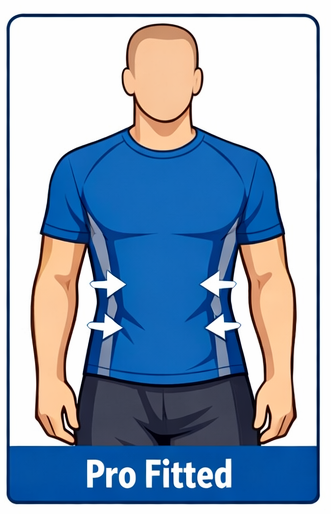
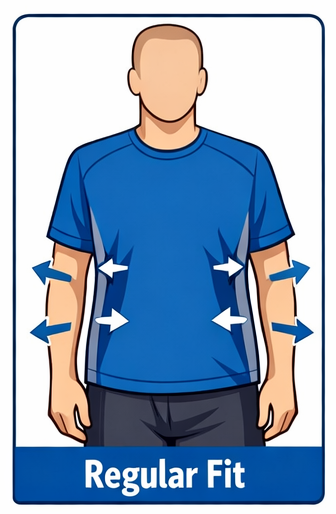
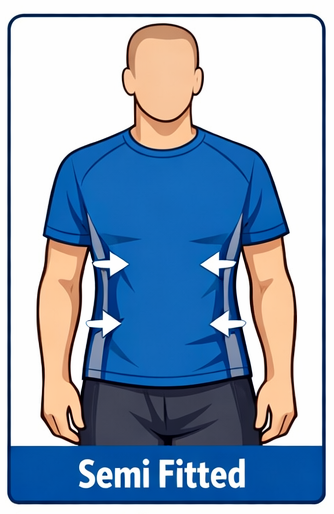
Garment FITS

The standard fitting for clothing, pretty similar to normal casual clothing. The garment is designed to be almost loose fitting and is not tailored to hug the body tightly.

Also known as fitted, these garments are more shaped to contour the body, however they won't be restrictive. For the average athlete, this is probably the most common fit to be ordered.

This is where the garment is tailored to closely fit the body and is most commonly worn by professional athletes. It is likely to be nipped in at the waist to improve mobility and comfort.

A guide to tolerance

In sports clothing, small measurement variations—known as tolerances—are normal and expected due to the nature of textile production. Fabrics stretch, shrink, and behave differently during cutting, sewing, and finishing, which means that even with precise patterns, every garment reacts slightly uniquely. Performance materials like polyester blends, moisture‑wicking fabrics, and elastane also have mechanical stretch that can change the size by a few millimetres during handling. On top of this, garments are assembled by hand or semi‑automated machinery, and each seam, fold, or stitch can introduce minor differences. Because of these combined factors, manufacturers allow a tolerance range (typically ±1–2 cm) to ensure consistent quality while acknowledging that perfect mathematical precision isn’t achievable in textile production. It is perfectly feasible that you could try on (for example) a large tee (but made to the upper end of the tolerance) and an extra large (made to the lower end of the tolerance) and there exist very little between the two sizes. This is though dependant on the brand you are wearing.
Your cart is empty
Search